Animal Personality and Culture Projects
Ethologist and evolutionary biologist have long appreciated the role of intraspecific trait variation, but wildlife ecologists have historically considered intraspecific variation noise surrounding an adaptive mean. Further, behavioral ecologists understand the importance of social and asocial learning in the development of behavior, but the notion that many fitness enhancing behaviors (e.g., habitat selection, diet selection, migration) may be predominately shaped by learning and cultural transmission across generations rather than derived via natural selection of genes is a novel notion. Dr. Jesmer and the WERC Lab quantify infraspecific variation in foraging and movement behavior and ask if (1) such variation is the product of plasticity or cultural transmission, and (2) if such variation improves the adaptive capacity of wildlife populations.
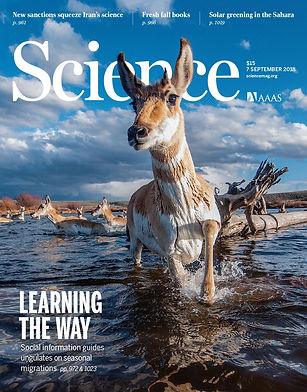
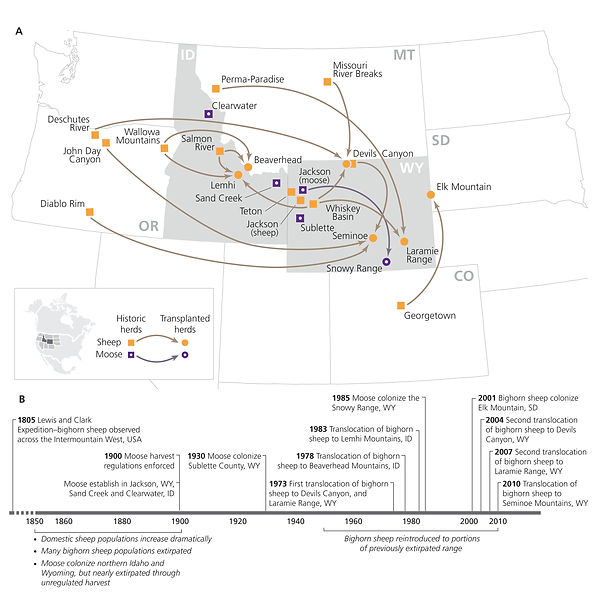
Social Learning and Cultural Transmission of Migratory Behavior
Brett Summary
Placeholder



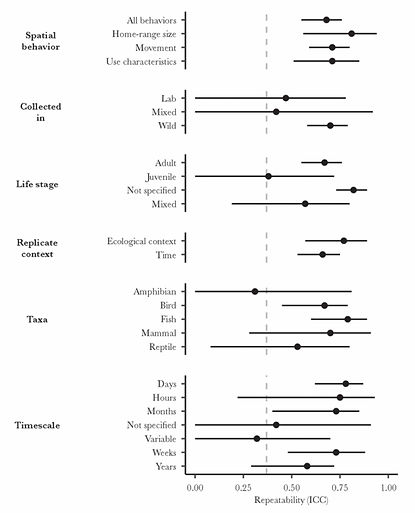
Spatial Personalities: Consistent Individual Variation in Spatial Behavior

Brett Summary
Placeholder
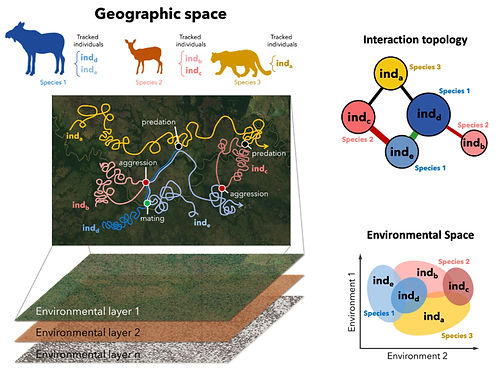
Disparate Predation Risk Among Spatial Personalities of Prey
Annie Stevens, MS
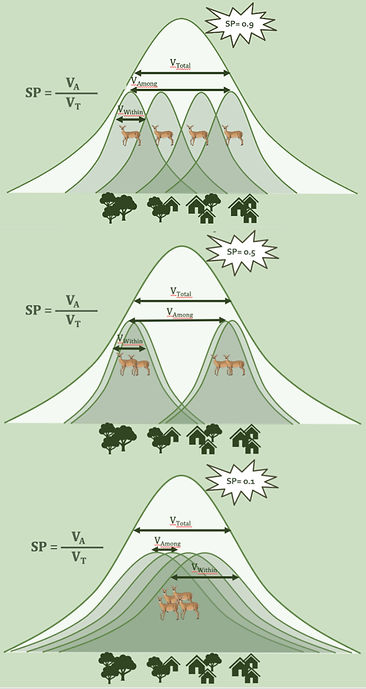
Annie Stevens completed her MS in the WERC Lab in 2025. Her research focused on how spatial personalities influence habitat selection and predation risk.
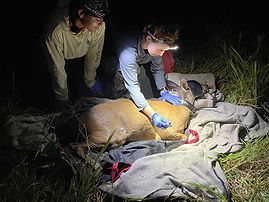
Her fieldwork was in the tropical Belize-Maya Forest in northwestern Belize, where she deployed GPS tracking collars on white-tailed deer to study their habitat selection and home-rage size. This is the first study on deer in Belize, and one of the few examining the movement ecology of deer in the Neotropics!
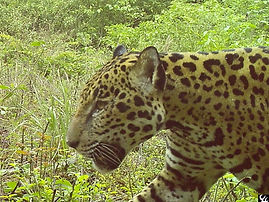
Annie also investigated how the spatial personalities of deer may influence predation risk. To accomplish this, she integrated GPS tracking data on deer, remotely-sensed habitat data, and camera trap data on jaguars and pumas collected from Dr. Marcella Kelly’s Belize Jaguar Project.